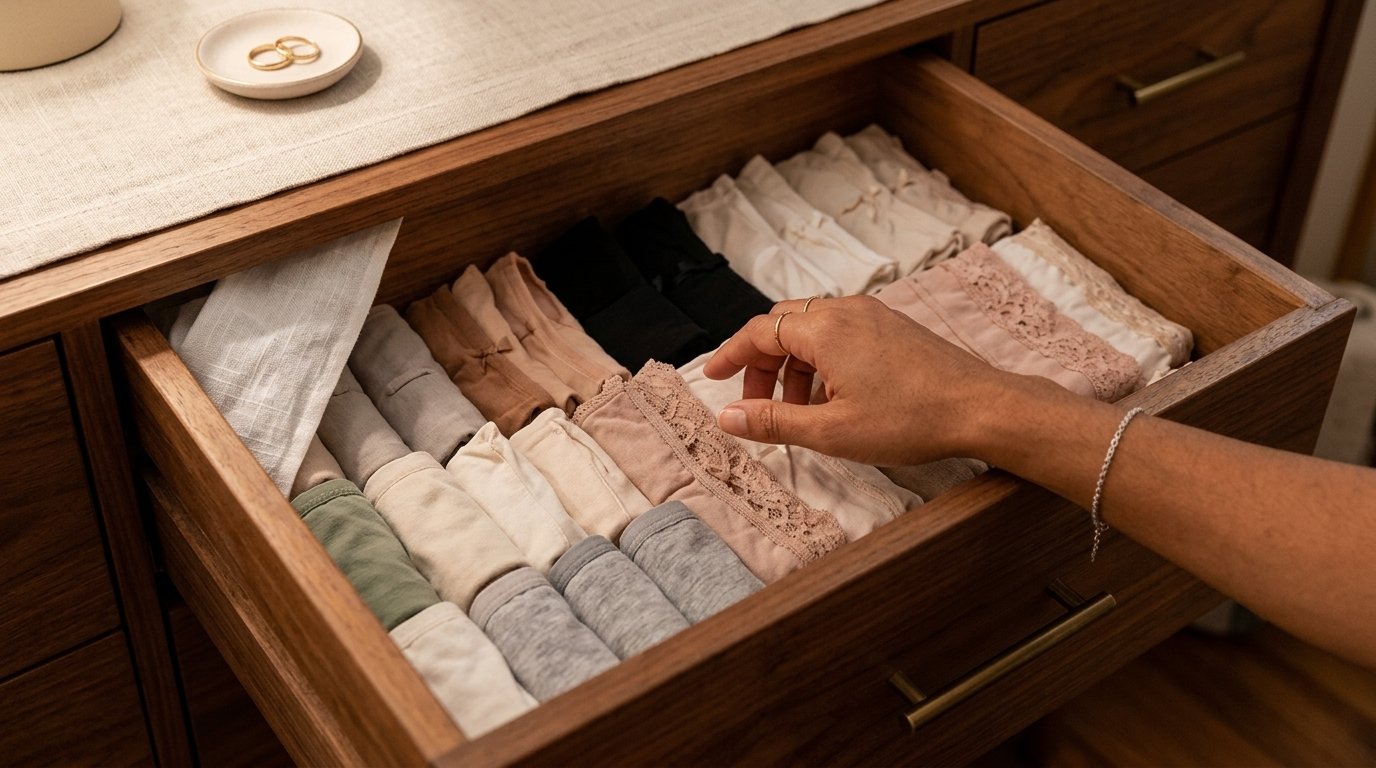
Recurring infections are rarely about bad luck. More often, they are the result of small, accumulated habits: the wrong detergent, synthetic fabrics worn too long, inadequate rinse cycles. The vaginal microbiome is a precise ecosystem. When disrupted repeatedly, it signals imbalance rather than isolated incident.
Why it keeps happening
The vagina is home to beneficial Lactobacillus bacteria that maintain acidity and protect against harmful organisms. When that balance is repeatedly undermined, the environment becomes easier for unwanted bacteria and yeast to colonise. Common triggers include residual detergent on underwear, wearing damp clothing for extended periods, synthetic fabrics that trap heat and moisture, and hormonal fluctuations that shift pH naturally.
The goal is not to eliminate every variable. It is to reduce the consistent ones.
What you can change today
- Switch to a gentle, pH-appropriate underwear wash. Standard detergents sit at a pH of 9 to 11; they leave residue on fabric that sits against the body’s most sensitive skin all day.
- Change out of gym wear and swimwear promptly. Warm, damp fabric is an inviting environment for unwanted microbes.
- Choose breathable fabrics: cotton and linen allow airflow and reduce moisture retention.
- Dry underwear completely before storing. Damp fabric in a drawer continues to harbour microbial growth.
- Wipe front to back, consistently. It is a small habit with significant consequence.
When to see a doctor
If discomfort, unusual odour, or discharge recurs more than twice in a six-month period, speak with a gynaecologist. Recurring bacterial vaginosis or yeast infections often have an underlying pattern that a professional can identify and address. Self-treatment without diagnosis can mask what is actually happening.
The correction begins with what touches you most intimately. A routine built on consistency, not reaction. Yiah was made for this; not as a treatment, but as prevention refined into ritual.